
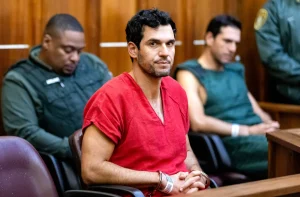
Harassment Allegations Surface in Alexander Brothers Sex Trafficking Case as Trial Nears
January 6, 2026
“Change your perception, and you could change someone’s life.”
— Department of Homeland Security, Blue Campaign (Department of Homeland Security)
On January 11, 2026, the U.S. marked National Human Trafficking Awareness Day 2026—known nationwide as #WearBlueDay—a coordinated push by the Department of Homeland Security’s Blue Campaign and partner agencies to flood America’s feeds and streets with one demand: look again, speak up, and help someone survive. The campaign urged people to post photos wearing blue, share hotline resources, and learn how traffickers weaponize the internet—fake job ads, grooming on social media, encrypted chats, and livestreamed exploitation—to trap victims in plain sight. (Department of Homeland Security)
This year’s National Human Trafficking Awareness Day 2026 unfolded against a louder backdrop than ever. Federal messaging out of Washington framed January as National Slavery and Human Trafficking Prevention Month. With the White House promising expanded tools to “end the evil of human trafficking” and boost survivor services—an unmistakable signal that the national lens is locked on the crime and its digital accelerants. (The White House)
On the ground, #WearBlueDay coverage stretched from California to Appalachia. State and local agencies amplified warning signs, emphasizing that trafficking doesn’t always look like an abduction—it looks like coercive control, fraud, and force for labor or sex, often orchestrated online. Broadcasts and local reports highlighted how communities can intervene, while prosecutors and advocates pressed the public to learn the indicators and report tips immediately. (https://www.wvva.com)
The internet remains the primary hunting ground. In the days leading up to National Human Trafficking Awareness Day 2026, the FBI warned about virtual kidnapping scams using AI-altered “proof-of-life” photos scraped from social media—digital terror designed to extort families into paying ransoms within minutes. That alert landed squarely inside #WearBlueDay’s mission: teach people how predators exploit our screens, then choke off their leverage with awareness and verification. (Village News)
How it unfolded (Jan 11): The Blue Campaign rallied institutions, faith groups, and city agencies to “turn the timeline blue,” asking people to post, tag, and push hotline info. State sites echoed the call, giving ordinary users a simple playbook: wear blue, share vetted resources, and report suspicious activity to authorities or the national hotline. By night, timelines read like a roll call—photos, survivor orgs, and a flood of local PSAs. (cdss.ca.gov)
Digital and forensic threads: Cases that break on days like this often start with cyber breadcrumbs—DMs, ad metadata, location pings, crypto payments, or geotagged images. The campaign’s practical goal is to increase those starting points by multiplying tips. Even one flag—an abrupt new “boyfriend,” a minor advertising “massage” services, a roommate who can’t keep her own documents—can trigger an investigation, a search warrant, a rescue. That’s the silent math of awareness: more eyes, more evidence, more exits.
Status: As of January 11, 2026, #WearBlueDay’s institutional push is active nationwide, with federal, state, and local agencies urging steady participation all month. Expect more public tips, targeted stings, and survivor outreach across January—because awareness opens doors that enforcement can kick through. (Department of Homeland Security)
Backstory: The observance was established in 2007 and sits inside a month-long prevention effort every January. It’s not a hashtag stunt; it’s the yearly moment when silence loses, and the web’s darkest corners get dragged into daylight. (National Today)
“My Administration renews our commitment to end the evil of human trafficking… and ensure that every trafficker faces the full force of American justice.”
— White House Presidential Message, Jan. 2026 (The White House)
Local newscasts and sheriff’s offices used National Human Trafficking Awareness Day 2026 to push concrete steps—learn signs, share resources, call it in—reminding viewers that many cases begin with a single tip from someone who finally saw what was always there. (https://www.wvva.com)
Read more crucial Missing Person News and Alerts on The Missing.org

