
DNA identifies Suraj Lama After Disappearance in Kochi, Prompting Inquiry into Custody Lapses
February 9, 2026

“Victims are targeted and befriended via social media platforms like Facebook and Instagram, then lured to Delhi, Haryana, and Rajasthan and sold.”
— Meghalaya Police (as reported by The Times of India)
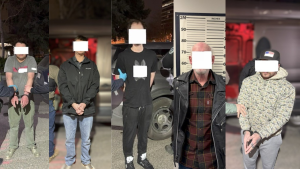
A missing-person report in Ri-Bhoi, Meghalaya, unraveled into a full-blown Meghalaya human trafficking case that crossed multiple Indian states—and it started with a Facebook “friend.” On October 29, 2025, police disclosed that a young woman from Meghalaya had been sold for ₹3 lakh and forced into marriage in Rajasthan, following months of grooming by an online contact. Investigators say the accused used social media to build trust, then moved the victim across state lines under the promise of marriage before selling her into a forced union. Three suspects—including a woman alleged to be the local “kingpin”—are now under arrest. (The Times of India)
According to the case file detailed by Meghalaya Police, the investigation began with an FIR on June 11 from the Byrnihat area in Ri-Bhoi. Leads placed the victim in Rajasthan; working with Rajasthan Police, she was rescued and brought back to Meghalaya. During debriefing, she revealed that a man from Assam had groomed her on Facebook and convinced her to travel to Delhi and then Rajasthan. There, she was sold and forcibly married. (The Times of India)
Arrests followed in quick succession:
Investigators say the network has trafficked at least five girls from Boko (Assam) and one from Tripura over two years, using a consistent pattern: extended online courtship on Facebook/Instagram → invitation to travel for “marriage” or tourism → isolation → sale into forced marriage. That method aligns with other recent Indian cases in which minors and young women were trafficked and sold for marriage, often in Rajasthan or neighboring states. (The Times of India)
Digital/forensic trail: Police are reportedly analyzing the suspects’ phones and social accounts to trace message histories, contact graphs, and money flows tied to the ₹3 lakh sale. Travel records (rail station CCTV, ticketing) and call data are expected to strengthen the interstate conspiracy charges. The rescue itself—enabled by cross-state coordination and the victim’s escape from confinement—provides first-person corroboration of the transport and sale. (The Times of India)
Status now: With three arrests across Assam and Rajasthan and a rescued victim back in Meghalaya, authorities are expanding the probe to identify additional buyers, recruiters, and transporters tied to the ring’s cross-border routes. Police have publicly warned that social platforms remain prime hunting grounds for traffickers exploiting romance, jobs, and marriage as hooks. (The Times of India)
Law enforcement officials emphasize that romantic grooming on Facebook and Instagram remains a dominant recruitment vector in forced-marriage trafficking networks. The Meghalaya case mirrors patterns seen in other 2025 investigations where traffickers “buy” and “sell” girls for marriages, often targeting vulnerable communities and exploiting interstate gaps in oversight. The Times of India has documented similar pipelines—Lucknow to Rajasthan, Chhattisgarh to Madhya Pradesh/Rajasthan—underscoring how social media enables hunters to reach victims far beyond their neighborhoods. (The Times of India)
Anti-trafficking advocates say this case should trigger platform-level safeguards—friction on new friend requests, stricter identity verification for marriage-related groups, and faster law-enforcement interfaces for missing-person leads. Meanwhile, local police urge families to report disappearances immediately; the Ri-Bhoi FIR and rapid interstate coordination were decisive in rescuing the victim alive. (The Times of India)
Read more crucial Missing Person News and Alerts on The Missing.org